Tuesday, 10 December 2013

Bett Education Show 2014

BETT 2014 Jan 22 to 25 Excel Centre London - Powering Learning

Its nearly that time of year again! We are excited to annouce that this year we will be attending the Bett Education Show 2014.  This year we have a bigger space, enabling us to bring more of our fantastic machines!
Bett is the global meeting place for the education technology community, bringing together 35,000 educators and learning professionals every January. Attending the event is the best way to see the latest technology and innovative solutions that inspire, in order to shape and improve the way people learn from the classroom to the boardroom.

On show this year will be the Piranha CNC Router which has a working area of 1300x1300mm, one of which we have recently installed at Oxford University.  Two laser machines, the bench top PJB6050 and the H-Series PJH1060 will be on demonstration.  We are also excited to announce the launch our new Piranha 900x600mm engraver at the show!
Why not take the opportunity to experience our brand new demonstration facility in Aylesbury.  Radecal South is just a 40 minute train or an hour car journey outside of London!  Book a full demonstration of all our machines during Bett 2014 and receive all the information from the Radecal team. 
Find us at STAND F78!
Bett show banner 530x80

Radecal's Twelve days of Christmas


THE RADECAL 12 DAYS OF CHRISTMAS!


We know some of you maybe tightening your belts this season, therefore we have pulled together some CRACKING offers to help you get the equipment you might not have been able to afford, or to update your current equipment.  Each day a new offer will be introduced and last up until the twelth day.  The offers will last over twelve working days during December from the 5th, to the 20th 2013.  This offer and equipment are limited.
Not only will you see costs from £18 a week for one of our lasers, you could also get a free iPad or Kindle with you purchase*!
*: Specific machines only, Some equipment maybe limited.
Visit our website for further details:
www.radecalmachinesales.com

Tuesday, 3 December 2013

Print isn't Dead!

Print isn't dead - and we hope to prove it

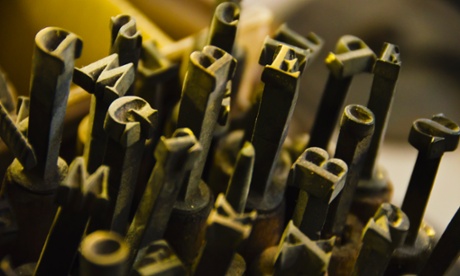
printing press letters journalism newspaper
'It is easier to start a newspaper than to save one'. Photograph: Tetra Images/Corbis
Disruption is the great catch-cry of the modern newspaper industry. It is a byword for the Internet – the technology that hastened the news-cycle, that stole the classifieds and ruined the model on which print journalism had based itself for centuries. Entire TED sessions have been given over to it. Clayton Christensen, the Harvard Business School professor, has written a small bible on the topic.
But panic is the better word. Panic is the white noise of large media organisations. It is their most constant emotional state. It was panic that caused newspapers to first ignore the internet as classified advertising moved online and then misjudge it as they scrambled to keep up. And it is panic that has stripped confidence from print journalism before disruption has actually made it unviable.
I make these two points because I think the distinction is the best means of explaining the print newspaper we are in the process of launching. There is no doubt we are announcing The Saturday Paper – a sister toThe Monthly and Quarterly Essay – in the leeside of a storm that has battered newsrooms around the world. But we do so because we think this storm has created a panic which forced news organisations to abandon newspapers before they needed to. Panic has caused newspapers to respond to disruption in damaging ways.
There is no question in my mind that newsprint remains the best place to read long-form journalism. And while print survives in niches, long-form journalism is the greatest niche of all – a type of journalism forced out of newsrooms as journalists are sped by the 24-hour news-cycle and try to compete in print with the kind of fast-paced news to which the internet is clearly better disposed.
This is where panic intersects with disruption. I think there is a model under which print journalism can succeed. Indeed, all our projections have this being true. But that model cannot be about competing with the internet – not for classified advertising, not for scope of audience, not for being first. It is a model wherein you conceive a newspaper around its audience and then decide what newsprint does best for that audience. Our answer is news that jams the gears on the internet’s voracious cycle; news that takes time to produce, that accepts the best account is not always the first account, that holds back the flow of information and tells readers what is really important. It is news that is analytical, complex and driven always by narrative. It is a broad niche.
Confidence in niches is uncontroversial. In magazine publishing, they are a given. The successes of Monocle or Frankie make this plain. But in newspapers they have not been effectively mined. As the media strategist Philip Phelan wrote five years ago: “The future of newspapers must be smaller, specialised and personal.” That final qualifier is the important one. Indeed, it defines the other two. Newspapers struggled even before the internet to properly understand their audience – it had always been too broad and then, when it contracted, it was too diverse. Christensen addressed this in his study of disruptive technologies and their effect on disk drives, the fruit fly of the technology industry. Hewrote that “leading firms were held captive by their customers, enabling attacking entrant firms to topple the incumbent industry leaders each time a disruptive technology emerged.” This is the legacy of audience. Confusion over existing readers and a desire for new ones has made the panic in newspapers even worse.
And so we think print is not dead, but it is easier to start a newspaper than to save one. Nothing has effectively replaced the beauty of holding a paper at the weekend, or of reading a long story in one. When it comes to forming habits, nothing competes with the predictability of a print cycle and the physical act of turning pages. Even in their weakened state, stories in newspapers have greater impact than stories that appear only online.
There are few more effective ways to be called crazy than to start a newspaper in 2013. But we are launching The Saturday Paper because we think the only way to save newspapers is to start them again – to respond to panic with a business model that uses niches to allow calm; to repair the damage done to news journalism by speed; to work with difficult, important stories and write for new audiences.
We believe the best way to help serious journalism is to salvage the platform that best carries it. That is why we believe in print.

Tuesday, 26 November 2013

Wide-format Overview

Wide-format overview

Article picture

Searching for wider profits 

The world of wide-format continues to throw up a whole host of interesting and innovative projects. From eye-catching billboards and colourful interior designs, to innovative vehicle livery and branded banners, the market is well stocked with a variety of work to keep companies busy.

This constant evolution of work, as well as the technology that is used to produce it, is what makes the sector so exciting. Barely a week goes by where we do not hear about a company using wide-format technology in a different way to create a new project. And with Sign and Digital UK and FESPA 2013 sure to have created more food for thought in the wide-format arena, this development of projects and the way kit is used is only set to continue.

With this in mind, what are some of the most innovative companies up to in the wide-format sector? What technology are they investing in, and how are they using it in new, creative ways to produce yet more exciting work? And, most importantly, how can our industry learn from them in order to diversify? 

Ltd Limited unlimited

Ltd Limited was the first UK company to purchase an Epson SureColor SC-S70600

Bethnal Green-based LTD Limited is one firm to have recently bolstered its wide-format equipment portfolio, with the help of Epson. LTD, shorthand for ‘Learn to Dream’, specialises in creative bespoke interior graphics, and has seen demand in this sector grow significantly.

As a result of this demand, LTD Limited opted to invest in an Epson Surecolor SC-S70600, sealing its place in history as the first UK company to do so. Director, Craig Beecher, explains how the purchase allows the firm to tackle a range of projects, utilising a selection of materials in the process.

“We use the Surecolor SC-S70600 to produce luxury décor manifestations for exclusive business and retail interiors,” explains Beecher, adding: “We print on a range of materials. It is particularly effective on white and clear vinyls, 3M Clearview and wall-papers.

Until relatively recently architects were not really that interested in interiors. Now, however, they have realised the impact and effect interior graphics can produce and we work with them to achieve a wide variety of effects on walls, glass, wood and metal”
“Until relatively recently architects were not really that interested in interiors. Now, however, they have realised the impact and effect interior graphics can produce and we work with them to achieve a wide variety of effects on walls, glass, wood and metal.”

The Surecolor SC-S70600 is Epson’s first 64" printer to support white and metallic inks simultaneously, a feature LTD Limited will use during various applications. The 10-colour model delivers resolutions of up to 1440 x 1440dpi, in a method that is delivered using Epson’s Ultrachrome GSX ink and Micro Piezo TFP printheads.

One of the first projects off the new device was an installation for the City of York Council Buildings. It involved filling the interior of the council buildings with designs incorporating graphics and fine line drawings, using silver and other metallic effects printed on to dusted materials, clear and white vinyls and wallpaper.

Before the Surecolor we just wouldn’t have been able to produce and deliver this project so efficiently and with the level of metallic impact we wanted to achieve”
“Before the Surecolor we just wouldn’t have been able to produce and deliver this project so efficiently and with the level of metallic impact we wanted to achieve,” added Ltd Limited digital manager, James Everett.

Signcraft is another firm to have invested in new kit in order to support its expanding business. The West Drayton company has served the industry for over 40 years, and has steadily grown to offer a professional marketing board service to clients in the property sector. More recently, it expanded its capabilities to deliver architectural signage, fascias and displays, diversification that led to a new investment. 

Following a purchase of a Seiko Colorpainter 64S printer in 2004, the firm opted for a new Seiko II Colorpainter W-64S large-format printer, from Colourgen reseller, City and West End Solutions. The 64" device uses new piezo printhead technology that has been developed by Seiko, in order to deliver what it describes as ‘outstanding’ image quality without loss of colour density.

“We got to a point where we needed more than the old 64S machines could offer, so carried out a very detailed review of what was available in the market,” explains co-founder, Bob Colwell.

We still deliver the standard property boards just as our clients want them, but the Colorpainters have allowed us to grow and develop our business in line with the needs of our customers”
He goes on to explain that the Colorpainters have allowed Signcraft to add a number of new applications to its solutions portfolio, such as wall-paper and large-format signage, further enhancing the business as a whole. 

“Our business has had to move forward to remain successful,” explains Colwell, adding: “We still deliver the standard property boards just as our clients want them, but the Colorpainters have allowed us to grow and develop our business in line with the needs of our customers. 

“As well as boards, we can provide complete signage solutions for large public areas like shopping centres, shop-fronts and more. This has led to a lot more referral business and is certainly keeping us busy and profitable.”

DIY wide-format

Hope Technology's Alan Weatherill says the new Mimaki CJV30 printer/cutter will
allow the firm to provide customers with printed marketing materials

Companies have begun to realise the value of taking more wide-format work in house and using it to create more profit for themselves. High-end bicycle component manufacturer, Hope Technology, is one such firm. Although not a print business, the firm was keen ensure its brand was being shown to its fullest, supplying dealers with various marketing materials to accompany the bicycle products it supplies.

As part of this strategy, it invested in a Mimaki CJV30 printer/cutter from Granthams Graphic Technology. The new purchase will sit alongside an enviable arsenal of CNC milling equipment, laser cutting, anodising and engraving machinery, boosting its overall service offering.

“I’m responsible for producing prints that will be seen in thousands of cycle shops around the country, so it’s important they’re an accurate reflection of the brand,” explains marketing manager, Alan Weatherill, adding: “Our old printer/cutter couldn't accurately produce long runs of decals, but the demo we had with Granthams ensured we were confident about making them ourselves.

Our dealers, who are primarily independent bike shops, can request any form of marketing resource from us. We tailor our support for particular events, but the collateral is usually in the form of banners and signage, which is created in-house on the Mimaki”
“Our dealers, who are primarily independent bike shops, can request any form of marketing resource from us. We tailor our support for particular events, but the collateral is usually in the form of banners and signage, which is created in-house on the Mimaki.”

It is this flexibility of the Mimaki that Wetherill praises, explaining that it has allowed the firm to supply individual dealers with select marketing materials: “Whether it’s window stickers for one of our dealers, personalised bike wash banners for Mountain Mayhem, perfectly cut out slat-wall branding for a tech shop or a shot of the Hope Factory Racing riders out in the hills—we will run it all on the Mimaki.”

The firm now plans to reprint the photographs that adorn the corridors of the museum, which houses memorabilia and on-loan race bikes from pro-rides that the company has sponsored.
Driving forward

Don-Bur Group, and its graphic production company Sapphire Graphics, has
worked with GPT to identify appropriate kit to produce vehicle livery

Elsewhere, the Don-Bur Group, a designer and manufacturer of commercial vehicle trailers, has also identified the profits available from in-house wide-format production. The firm also owns a graphic production company, Sapphire Graphics, which produces various vehicle livery projects onto a range of substrates for indoor and outdoor uses. 

To support this side of the business, Sapphire Graphics has worked with Graphic Printing Technologies (GPT) to identify the kit needed to produce all material required. Recently purchased products include a Mimaki JV33 160 and JV34 solvent inkjet printer with bulk systems. 

It is essential that we deliver quality graphics for our customers that are durable, accurate and on time”
“We run a very busy, responsive and reliable service, not only for our holding company, but also for many other customers,” stresses Sapphire Graphics general manager, Lee Leighton.

He adds: “It is essential that we deliver quality graphics for our customers that are durable, accurate and on time.” 

In order to bolster production further, the firm also invested in an Aquaseal SW3300 from GPT, to support the finishing of projects. The device produces a smooth liquid laminate for outdoor materials as wide as 3.3m, including billboards, vehicles, build signage, and fleet graphics—a feature that Leighton says fits in well with the work Sapphire Graphics produces: “All our prints require finishing and in the past we had to lacquer everything by rolling it on by hand. GPT recommended the Aquaseal liquid laminator and this has revolutionised our production work-flow, saving a huge amount of time and manpower, as well as achieving generous cost savings in terms of materials.” 

Wider use of wide-format

Fujifilm's Acuity LED 1600 is one wide-format device being used to produce work
not usually associated with the wide-format sector

Although traditionally used for signage projects, wide-format technology is being used by companies in their production methods for varying types of work, highlighting the diversification opportunities open to sign-makers. Glossop Cartons is one such firm to have done exactly that, opting for wide-format kit to boost its service offering in the printed packaging market. 

The firm had previously provided litho printing services, but opted to take advantage of the benefits digital technologies offer through its purchase of a Fujifilm Acuity LED 1600 UV LED inkjet printer—the first UK company to do so.

“There is an increasing demand for short run and bespoke packaging, and digital technology perfectly suits this requirement,” explains the firm’s director, Jacky Sidebottom. 

There is an increasing demand for short run and bespoke packaging, and digital technology perfectly suits this requirement”
She adds: “Thanks to the Acuity LED 1600 we can now print, and subsequently cut out, a diverse range of substrates quickly and efficiently, and also create packaging solutions distinguished by special varnishing effects. The use of this technology improves our turnaround time and removes the traditional costs of litho print and die-cutting, both of which are costly for short proof print runs.”

The Acuity LED 1600 offers printing speeds of up to 20sq m/hr, can support substrates up to 1,610mm in width and is designed to print on wide-format roll media and rigid sheet substrates up to 13mm thick. It also features six colours, plus white and clear ink as standard.

Fujifilm Europe’s marketing and communications manager for graphic systems, Graham Leeson, claims the flexibility of the Acuity LED 1600 helps in the production of different types of work: “We are happy that print service providers such as Glossop Cartons acknowledge its value in the packaging environment; we are confident that this installation is just the beginning of a successful path in this area for Fujifilm.”

From speaking to many different companies, it remains clear that the wide-format market is as vibrant as ever. Whether it is sign-making firms bolstering their own production line, or businesses from other industries harnessing the technology to widen their service offering, investment seems to be an ongoing trend. And in the wake of Sign and Digital UK, in addition to the interest Fespa 2013 will inevitably drum up, activity is only set to continue. 

Thursday, 14 November 2013

An eye to the wide-format future

An eye to the wide-format future


Forecast for digital graphics production by ink-jet technology 2012 to 2017 (courtesy of InfoTrends)
Behind the scenes, endeavouring to provide the wide-format industry and its watchers with accurate forecasts and related numbers, are impartial analysts and consultants whose skills result in accurate and reliable results. These specialists are able to give confidence across the board to everyone from manufacturers down to investing businesses of all sizes, as well as to channel and finance houses: all of whom require facts and with no accompanying biased puffery. It is debatable, however, how many sign-makers and display producers actually look at independently garnered information instead of just listening to what their suppliers tell them which, unsurprisingly, will be biased towards the equipment being purchased. By my reckoning, remarkably few end users take advantage of available resources and use them as an indication of market trends and direction.
Claims about the future have to be substantiated and proven correct - within reason - or predictions are not going to be worth the paper they're written on. Industries where technology plays a key role are particularly susceptible to unforeseen, drastic changes, with the wide-format sector a prime example of this. Thus far, however, bellwethers have held their own with the predicted growth in UV-curable engines countering the anticipated decline in solvent-basedprinters, while eco-solvent, latex and even aqueous-based platforms look to remain fairly steady in the next few years.
Tim Greene, wide-format service director at InfoTrends, agrees that there is no question that some parts of the wide-format market are mature or even in decline: "The way we look at it is that there are technologies that served the market in its early days that become less and less competitive over time as new technologies emerge," he states. "This is both natural and expected. A good example of this is in the low-end of aqueous ink-jet where those devices have been primarily used for proofing. Now that many customers and printers are either simply used to viewing their proof on the screen or just too time-constrained to demand hard copy proofs, the volume of that business is in decline."
In the overall graphics market InfoTrends is seeing a total volume growth of 6.7 percent from 2012 through 2017 based on several key dynamics. The first is the value that wide-format graphics brings, which is substantial. "There are numerous studies that prove the value of wide-format signage and graphics applications in terms of ROI, which we believe is increasingly important for marketers," Greene believes. "We also know that marketers believe that signs and graphics can be particularly effective at communicating their intended message. Effectiveness plus value equals sustained growth. We have surveyed wide-format print buyers in a recent study and found that there are very strong buying intentions for the coming year, averaging about a 14 percent increase, which reinforces the point that this is a growth business."
Because the use of wide-format technology now straddles a variety of industry sectors, it has become an integral element in many production operations from prototyping and proofing through to end products. Gauging statistics can never be an exact science, but companies such as InfoTrends know how to extrapolate the relevant facts from the fiction in the relevant segments to come up with accurate and valuable predictions.
"As for the validity of forecasts, I've developed something of a rebuttal to sceptics that goes like this: 'Look, it's not hard to guess what people want but what do buyers want?'" Greene continues. "They want to communicate their messages as convincingly and cost-effectively as possible. Also, they want to work with companies that understand what they are trying to do and that can facilitate accomplishment of those goals. I think our technology forecasts are tethered to the answers to those questions. Whichever wide-format graphics printing technologies deliver the ability to serve those customer demands are what will win the day. Technology-wise, the market directions are pretty clear: the question is usually simply velocity."
At the end of the day, forecasts give us a guide and show those interested in wide-format how the different ink technologies are most likely to perform in the coming years. We're not relying on soothsayers or those with a crystal ball to provide the information; instead, we are fortunate that we have industry analysts with the right degree of experience to extrapolate the relevant detail that clearly shows the direction our industry is heading.

Textile printing: which ink, and why?

Textile printing: which ink, and why?

Textile printing offers a good choice of ink formulations
Until recently, if digital textile printing was discussed among those in the display industry, most people's minds turned to dye-sublimation. But advances in UV-curable inks – and, of course, the potential of – have combined with ever more versatile materials to add more options. This opens doors to newer applications as well as extending the opportunities for increasingly diverse signs and graphics. Additionally, one should not forget the options for producing heat transfers with the help of eco-solvent and even aqueous-based machines that have long proved to be a popular route into the apparel market.
The key to all successful textile printing lies in the marriage of ink with fabric, whether this is analogue or digital. Traditionally the domain of screen-printing, the appeal is growing for a move into new technology in order to take advantage of shorter runs, lower set-up costs andpersonalisation. Users of roll-fed wide-format machines that use UV-curable and solvent-basedinks might prefer merely to find a material which, to all intents and purposes, behaves like a fabric and that can be handled in their existing printer. But, in the real world, this is often a compromise when it comes to overall performance and finish.
There can be few display producers that aren't aware of low- and high-energy inks suitable for use on polyester-based fabrics. Manufacturers, too, are becoming keener on promoting the benefits of printing textiles digitally, with more now offering systems that print directly onto the material instead of using the two-stage sublimation process. While both of these options are ideal for printing typical display applications such as banners, flags and soft signs, there are differences between high-energy disperse and low-energy sublimation dyes. With the former being applied directly to the end textile, production might seem simpler but it is also critical that the machine runs smoothly throughout, as it is handling the end media and not transfer paper. Many of today's engines incorporate integrated fixation units, an essential prerequisite to enable the sublimation process to take place and for the ink to bond with the material.
Direct disperse, high-energy dyes offer excellent light-fastness, making them a good choice for exterior applications, but where fine detail and small text represent part of the criteria for the finished job, dye-sublimation using transfer paper can achieve a more controllable droplet size, minimising dot gain. Pre-treated fabrics can also help in colour stability, as can the use of a profile that takes into account the idiosyncratic behaviour of fabrics.
Low-energy dyes for sublimation have the benefit of not being restricted to a material which can pass through a printer. As well as their extensive use in textiles, these inks are suitable for transfer onto most surfaces with at least a 50 percent polyester coating. As such, users with machines that work with transfer paper can produce applications as diverse as mouse mats and mugs.
Acid and reactive dyes should not be discounted for the graphics market, with both commonplace in the garment arena. Acid inks are used primarily for printing onto silk, nylon and wool but also prove successful with leather; reactive dye-based chemistry is intended for linens, cottons and natural fibres. Both of these inks need post-treatment in the form of steaming and washing to complete the job.
We are hearing more and more about pigmented inks which claim a host of benefits, including their ability to print direct to virtually all textiles. Most of these chemistries still need some post-treatment, although a fraction of that required by other fabric processes, while some claim to require no finishing at all. Their advantages of ease of use and compatibility with a diverse range of fabrics are countered by the fact that they might not have as good a hand, or feel, as alternative dyes.
Is getting it right really complicated? Well, no, it shouldn't be, but digital textile printing still remains a bit of a black art when it is discussed among the majority of the display and sign-making cognoscenti. Perhaps it's not always easy to wax lyrical about the benefits when the complexity of pre- and post-treatments seems to instill fear in the hearts of those who are used to simply running material through a printer and out of the other side, knowing the job is done. Yet understanding dyes and their process is not rocket science and is well worth the learning curve for users wanting to break into the textile sector.

Tuesday, 12 November 2013

Make the most of print/cut technology!

Learn How To Make The Most Of Print/Cut Technology

"I am Sherlock Holmes," the detective once remarked. "It is my business to know." At Roland, it's our business to know digital print/cut. For well over a decade, we've been leading the way with our award winning legacy of ground breaking devices that combine the best print technology and the most accurate contour cutting. Take a close inspection and you'll see why Roland has always been a best seller among those who want proven print/cut performance. The reason is no mystery.


SOLJET PRO 4 XR-640


As our top-of-the-line printer/cutter, the 64-inch Pro 4 is engineered for volume production with a dual inline and mirrored print head configuration that yields exceptional image quality and high print speeds up to 528 sqft./hr.  The Pro 4 fires droplets of seven different sizes for beautifully smooth gradations, sharp, detailed photographs and flawless solid colors.  Integrated contour cutting produces graphics in virtually any shape.  With the Pro 4, Roland has introduced its most advanced eco-solvent ink,Eco-Sol MAX 2, in nine colors – CMYK, light cyan, light magenta, white, metallic silver and light black – all fully optimized for the Pro 4's revolutionary print head technology. 
All of this translates into stunning, vibrant large-format banners, signs, vehicle graphics, decals, POP displays and more.


VersaCAMM VS Series


With the industry’s most advanced print head technology, integrated print/cut capabilities, superior media handling and print speeds up to 248.6 sqft./hr. in dual CMYK mode (64” model), the VS series is our fastest, most versatile VersaCAMM wide-format inkjet printer/cutters ever. Metallic and white inks add impact to any graphic for attention-grabbing results that elevate your brand message.


VersaUV LEC Series


As the world’s first UV inkjet printer/cutters, Roland’s DPI award-winning VersaUV LEC series quickly revolutionized the packaging prototypeand short-run label industries. For the first time, professionals could print CMYK plus White and Clear inks for varnishing and embossing effects on virtually any substrate and then crease, contour cut or perf-cut their designs, all on one device through one seamless workflow.


VersaStudio


The VersaStudio BN-20 is the world's first desktop print and cut device to print CMYK plus metallic silver or white ink for a host of applications, from short-run decals and labels to indoor and outdoor signage, vehicle graphics, POP, comps, preliminary proofs, packaging prototypes, apparel decoration and more. As the industry's most versatile digital printing tool in its price range, the BN-20 accepts media from six to 20 inches wide. Choose from a variety of materials, including adhesive-backed vinyl, paper or heat transfer media. The BN-20 can be equipped with either eco-solvent or aqueous inks in four colors (CMYK). Five-color eco-solvent models are available with your choice of metallic silver or white ink. Windows compatible, the BN-20 comes with R-Works design software and VersaWorks RIP software.

Monday, 4 November 2013

Bett 2014!


Within the educational sector, students will soon be able to bring ideas to life, due to rapid development in the ‘digital revolution’.  A student’s creativity is as important as all other subjects and expression plays an important part in multi-sensory development.  CNC Routers and Laser Engraving equipment can provide students with the experience to broaden their knowledge in how technology in the design and production industry works. 
Our machines work to equip students with skills and knowledge they need for further study and employment in the 21st century workplace.
The current financial climate has left some education facilities in a situation where they are unable to keep up with changing technologies.  To overcome this issue, we have collaborated with Funding 4 Education, which assists in acquiring the technology needed and spreads the cost over the equipment’s life.  Freeing up the budget whilst still acquiring the machine through a flexible and cost effective scheme. 
For Bett 2014, our bigger stand will allow us to show more of our machines and what they can do. On show this year will be the Piranha CNC Router which has a working area of 1300x1300mm, one of which we have recently installed at Oxford University.  Two laser machines, the bench top PJB6050 and the H-Series PJH1060 will be on demonstration.  We are also excited to announce the launch our new Piranha 900x600mm engraver at the show!
Why not take the opportunity to experience our brand new demonstration facility in Aylesbury.  Radecal South is just a 40 minute train or an hour car journey outside of London!  Book a full demonstration of all our machines during Bett 2014 and receive all the information from the Radecal team. 
We’ll be at stand F78!
Contact us:
Radecal North 0191 417 2929 or Radecal South 01296 879 069


Thursday, 31 October 2013

Wigan and Leigh College Piranha PJH1060 Laser Machine Install

Radecal success rates in UK’s Colleges!
Wigan & Leigh College has been providing high-quality education and training for over 150 years.  Bustling with life and atmosphere, the College's School for the Arts Centre is the perfect environment to unleash a students’ designer edge!  Courses at the college include; Art and Design, Fashion and Clothing, Graphic Design and 3D Design with Interior Design.
Dave Gore, the head technician at Wigan and Leigh is a new Radecal customer and is extremely pleased with the product and service we provided. The college purchased a brand new Piranha H-series 1060 laser cutter engraving machine, which has a working area of 1000x600mm and an 80w laser tube.    
The purchase of the 1060 laser was a necessity for the college, to keep up with the services provided by other education facilities and to give students the best knowledge and skills to enable them to adapt when transitioning into University and the industry workplace.  We supplied fully training to staff members and also fully installed the machine.

“The laser has been great for the students’ curriculum as it has provided work related learning, meeting industry standards and can integrate into several course topics,” Dave Gore.
  
Students are now able to produce work ranging from 3D models, packaging graphics, print design work and also interior model making with intricate designs.  It has been a great addition to the college as the laser machine has reduced production times drastically, completing several jobs at once.  The laser machines can cut, etch and engrave within the same job saving time, with engraving speeds of 0-900mm/s and cutting speeds of 0-400mm/s which is highly efficient, especially when the laser is in high demand. 
  
Dave chose the 1060 laser machine from Radecal due to the”great, informative service” and the size of the machine.  The 1060 was the perfect size for the workshop with having a motorised table and 1000x600mm to work with, providing versatility for the curriculum now and in the future.

We also provided extra training to teachers at the college to increase product knowledge so they are able to enrich student’s lesson content.
 “Radecal are always available for any questions we have, they’ve provided a tip-top service which has been highly informative and useful for the staff, allowing us to provide effective course content to our students.  We are more than happy to recommend Radecal as they have been an amazing help to us” Dave Gore.
Our machines are suitable for Higher and Further Education and for Bett 2014.  Our bigger stand will allow us to show more of our machines and what they can do. On show this year will be the Piranha CNC Router which has a working area of 1300x1300mm, one of which we have recently installed at Oxford University.  Two laser machines, the bench top PJB6050 and the H-Series PJH1060 will be on demonstration.  We are also excited to announce the launch our new Piranha 900x600mm engraver at the show!
Why not take the opportunity to experience our brand new demonstration facility in Aylesbury.  Radecal South is just a 40 minute train or an hour car journey outside of London!  Book a full demonstration of all our machines during Bett 2014 and receive all the information from the Radecal team. 
Read about our work with Oxford University and other Education case studies online at:

Monday, 28 October 2013

Graphics!

The World Leader in Durable Indoor and Outdoor Graphics

For colorful banners that stand the test of time, Roland offers the durable graphic industry’s best-selling line of wide-format inkjets including eco-solvent and solvent printers and printer/cutters with models ranging from 30” to 104” in width.  Most models are supported by the company’s Two Year Trouble-Free Warranty, the industry’s longest and most extensive service and support contract.
Roland engineers understand that the ultimate quality of any sign or graphic is determined before a single drop of ink has been placed.  Accordingly, Roland inkjet printers and printer/cutters are designed and crafted for performance, including  high-speed print modes, exceptional media feed and take-up systems and automated maintenance systems that eliminate the need for daily manual cleanings while keeping heads, caps and wipers performing optimally.

Banners

The 4-color VersaArt printer combines the compact design and ease of use of the best-selling VersaCAMM series with advanced technologies such as Roland Intelligent Pass Control from the PRO III XJ series in one affordable package. Roland Eco-Sol MAX ink provides fast drying time, high density, wide color gamut, rugged scratch resistance, low cost per sqft, and broad uncoated as well as coated media support. MAX ink is virtually odorless and graphics are water and UV resistant up to 3 years outdoors without lamination. For blazing fast production of 6-color banners, the SOLJET PRO III printers set the standard. Roland AdvancedJET grand format printers support a host of remarkable features that establish them as the most versatile, low maintenance, high production printers on the market today. Eco-Xtreme inks produce rich, vibrant images even in high speed production modes, with increased color density, superior bonding with uncoated substrates, enhanced scratch and alcohol resistance.
Roland Certified Banner Media
  • ESM-LBV2 - All purpose Lightweight Banner
  • ESM-GBV - Economical glossy Banner

Mesh Banners

Roland AdvancedJET grand format printers offer enhanced production with the optional MU Mesh Printing Unit for economical unlined mesh media. Custom engineered for the AJ, the MU is easy to attach and detach and features a built-in drainage system for easy removal of excess ink. Popular for a variety of indoor and outdoor applications, mesh is particularly well suited for graphics that may be exposed to excessive wind or any graphic calling for a unique sheer look. Unlined mesh offers many advantages over lined mesh including a lower cost per square foot. In addition, unlined mesh is easier to print, handle and transport, and it does not generate liner waste.

Metallic Effects

Winner of the DPI 2009 Product of the Year award in the Ink Category,Metallic Silver ECO-SOL MAX ink makes it easier and more affordable than ever for you to print true metallic colors for dramatic effect and high profit margins. Featured in SOLJET PRO III XC-540MT,VersaCAMM VS and VersaStudio printer/cutters, Metallic Silver ECO-SOL MAX can be printed as a spot color for vibrant silver text and graphics or combined with CMYK to create an entire spectrum of metallic hues including gold, bronze and a host of pearlescent colors. This breakthrough silver ink technology delivers high density and enables you to produce premium banners that command premium prices.

Thursday, 24 October 2013

Jewelry making with Roland

Revolutionary Roland jewelry making devices combine everything you need, including powerful, easy-to-use software, to quickly produce a wide variety of wax models from your designs for fine jewelry. Our low-cost photo impact printers quickly turn pendants and charms into personalized mementos of great value.

Automated Wax Model Making

The Roland JWX-30 jewelry model making solution comes complete with powerful design software that allows you to create detailed 3D models that clients can review from every angle. From these files, the 4 axis desktop mill automatically produces intricate wax models of beautifully crafted rings, pendants, bracelets, brooches, earrings and cufflinks. JewelStudio allows you to digitize hand-sketches for follow simple step-by-step instructions to draw jewelry quickly and intuitively without hindering your creativity. GemStudio lets you select gems in a wide variety of shapes, sizes and types from an extensive library and place them with a single click of the mouse. You can then modify jewelry to different sizes or alter designs effortlessly.

Personalized Pendants and Bling

For an unbelievably low entry-price, you can add value to a wide range of jewelry and gifts, turning them into treasured mementos. Roland’s unique MPX Photo Impact Printers quickly and easily add text, photos, logos and other artwork to a wide variety of metal and acrylic items from souvenirs and plaques to charms and pendants.

Friday, 18 October 2013

Bett Education Machines!

Preparing Students for STEM-Related Careers

Across the nation, schools and universities are increasingly focused on providing the right Science, Technology, Engineering and Math (STEM) education to prepare students for the 21st century. Roland products add dimension to STEM instruction by enabling students to apply their knowledge of science, technology, engineering and math toward the design and production of real-world products.

Graphic Design, Apparel Decoration, Sign and Packaging Production

Due to their exceptional reliability and value, Roland CAMM-1 vinyl cuttershave for many years been the tool of choice for sign shops, apparel decorators and educational institutions worldwide. Optical alignment allow printed graphics to be automatically aligned and accurately contour cut. Included CutStudio™ software gets students up and running fast without additional investments in graphic design packages. It also offers powerful features that let users enlarge, reduce, reposition, rotate and mirror images.
With the VersaStudio BN-20 20” inkjet printer/cutter, we've taken everything that makes a Roland printer great and packed it into one powerful, profit-producing package. The BN-20 features award-winning mild solvent inks, your choice of media and metallic ink capabilities. This versatile desktop device can print and cut everything from apparel to labels, decals and posters.
Available in 64-inch, 54-inch, or 30-inch models, the VersaCAMM VS series of printer/cutters achieve stunning results across a world of applications, including signs, banners, vehicle graphics and wraps, fine art posters, packaging prototypes, labels, decals, POP displays and apparel heat transfers. Available in CMYK, CMYK + Light Cyan (Lc) and Light Magenta (Lm), or CMYK + LcLm + White and Metallic inks.

3D Modeling, Manufacturing, Computer Aided Design

With the iModela hobby milling machine, students can easily and accurately create and embellish a wide range of projects by producing 3D shapes, reliefs, textures and patterns from modeling wax, foam, balsa wood and plastic materials. Compact, easy to use and inexpensive,  iModela is the perfect tool for small-scale, class creative projects. For the price of a single 3D printer, every student in your class can have an iModela at their desk.
Capable of 3D scanning and milling, the MDX-15/20 is ideal for a variety of product design tasks, including reverse modeling, rapid prototyping, jewelry and model making, and small lot production.
The Roland MDX-40A milling machine is easy to set up and use, yet exceptionally versatile. Functional prototypes and parts can be produced out of a wide variety of non-proprietary materials with exceptional precision and surface finish. Easy-to-use CAM and simulation software is included, allowing students to easily go from their 3D CAD software to 3D parts using industry standard .stl files. The ability to use G-code allows educators greater flexibility and ease of integration with industry standard CAM programs including Mastercam, EdgeCAM, SurfCAM and Gibbs CAM.

Wednesday, 16 October 2013

Packaging with our Roland machines!

The Proof is in Your Hand

Until recently, producing realistic package prototypes was a very expensive proposition requiring either using specialized proofing equipment, or stopping the press to run samples. New Roland technologies are simplifying this process, making it easier, less expensive and more efficient than ever to create effective package prototypes that match the final product.
For packaging prototypes, Roland offers a complete line of inkjet printer/cutters, including new UV-LED and metallic eco-solvent models. All come with VersaWorks RIP software, which includes color management tools, variable data printing and other advanced features to automate production and ensure quality results. Roland printer/cutters take a design entirely through the printing and finishing stages, including die-cutting, all on one device.

Packaging Prototypes


Roland offers four inkjet lines ideal for the production of packaging prototypes: the VersaUV series of UV-LED inkjet printer/cutters, and three eco-solvent printer/cutters – SOLJET, VersaCAMM VS andVersaStudio models. All come with a white ink option, integrated die cutting capabilities, a maximum print resolution of 1440 dpi, and Roland Intelligent Pass Control technology for superior image quality in every print mode. Roland’s VersaUV also comes with clear ink for interesting textures and spot varnish effects in matte and gloss finishes. All eco-solvent printer/cutter lines include options for metallic silver ink which creates shimmering metallic effects.  Light black, included in the SOLJET Pro 4 model, ensures seamless grayscale reproduction for flawless photographic images.

Advanced Color Management Tools from X-Rite


Roland wide-format inkjet printer/cutters are supported by the industry’s most advanced color management tools from X-Rite, which can be purchased conveniently online from Roland.  Perfect for package prototypes or any application where color matching is critical, Roland’s X-Rite offering includes two options: the i1Basic Pro 2 which allows you to calibrate your monitor and adjust printer settings for consistent color output, and the more extensive i1Publish Pro 2 which also allows you to develop your own custom media profiles. Both include X-Rite’s i1Pro 2 spectrophotometer, PANTONE® Color Manager software and the i1 accessories package.

Color Management Partners


Roland is proud to partner with CGS, EFI and GMG to handle all your proofing and color management needs.